
 Written by:
Zarah Mae Torrazo leads the content team for Parkhound, WhereiPark, Spacer.com.au, and Spacer.com, where she focuses on helping drivers navigate city-specific parking rules, street regulations, and reliable monthly parking options across major North American and Australian markets. With nearly a decade of experience in research-driven content, she translates complex local parking policies into clear, practical guidance that helps people find safe, affordable spaces wherever they’re headed. Her work draws on a deep understanding of how urban parking systems operate and how shared parking solutions can support both drivers and communities.
 Edited by:
Louise is an SEO Writer for Spacer Technology, creating content for the Parkhound, WhereiPark, Spacer.com.au, and Spacer.com brands. Before joining Spacer, Louise wrote copies and blogs, news, retirement and financial education content. She is enthusiastic about reinforcing financial literacy and anything that can aid people in minimizing expenses and maximizing savings, which led to her passion for the sharing economy. She aims to educate people by translating complex ideas into easy-to-digest information and practical tips for maximum understanding and minimum migraine.
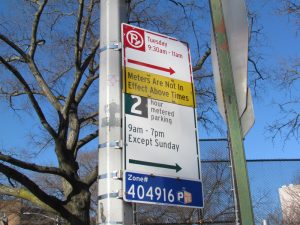
Alternate side parking is a NYC city parking rule that tells drivers when they have to move their cars to make room for street cleaning. On certain days or times, you can’t park on one side of the street because that side is scheduled to be cleaned. Drivers move their cars to the opposite side until cleaning is done, then switch back when it’s allowed again.
In plain terms:
“Alternate” means you take turns parking on different sides of the street. “Side parking” just means parking along the curb.
So, alternate side parking means you switch sides based on the day or time shown on the signs.
This guide is your ultimate resource for mastering NYCASP. We will break down what the rules are, how to decode the confusing signs, where to find daily suspension updates, and how to leverage technology to your advantage.
Cities, especially dense ones like New York City, use alternate side parking to keep streets clean and safe. Moving cars off one side lets street sweepers clear litter, leaves, and debris that would otherwise clog drains and attract pests. It’s also part of regular maintenance to prevent flooding and make neighborhoods look better.
Without ASP rules, trash would pile up along the curbs, storm drains would get blocked, and road markings would wear out faster. The system may be annoying for drivers, but it’s a simple way for cities to stay clean.
While New York City doesn’t publish specific data on how much alternate side parking improves street cleanliness, municipal research supports the logic behind it. A 2024 study found that when cars are moved and sweepers can do their job, dust and fine particles on road surfaces can be reduced by up to 75% in some cases.
There is no denying that NYC’s alternate side parking rule has caused plenty of headaches for drivers. In fact, it’s one of the city’s most complained-about parking rules and for good reason. Many people point to the early-morning rush to move cars, confusion over suspensions, and the nonstop stream of tickets as major frustrations.
A policy article by CityLand NYC noted that around 1.9 million ASP tickets were issued in NYC in the first 11 months of FY2023. More than one in 3 or 37% of cars got more than one violation while 7% got more than four.
Its notoriety even made it a cultural reference in several TV shows, documentaries and even songs, signifying how deeply embedded the rule has become in city life.
Another Streetsblog NYC survey showed that more than half of local drivers said they’d gladly pay for a residential permit just to avoid on-street parking rules like ASP.
Even city leaders acknowledge the controversy surrounding the ASP rules. Former Mayor Bill de Blasio once joked that “alternate side parking is like right up there with Satan in most people’s views.”
In 2022, New York City Sanitation Commissioner Jessica Tisch acknowledged the inconvenience caused by ASP, but stressed the importance of compliance after the city reinstated stricter cleaning schedules.
“I know it’s a pain to move the car,” she said, “but let’s be real — we need people to do it to allow our brooms to give the city the good scrubbing it needs.”
Alternate side parking sounds easypeasy, but it trips up even longtime city drivers. But there’s just a few things to keep in mind. On certain days, one side of the street must stay clear so the sanitation department can sweep. Signs along the block tell you when and where to move, usually with a “P” crossed by a broom symbol.
To help you better understand how ASP works, below is a step-by-step breakdown:
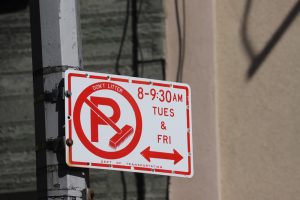
Look for the red or white signs on nearby poles. They’ll list cleaning days and hours. For example, “No Parking Tuesday & Friday, 9 AM – 10:30 AM.” Each side of the street can have different times, so always check both before leaving your car.
They typically look like these:
If you don’t move your car during Alternate Side Parking (ASP) hours, you’ll almost certainly get a ticket. ASP violations are some of the most common fines in New York City, and enforcement officers patrol consistently during cleaning times.
The standard fine for ignoring an Alternate Side Parking rule is $65 in Manhattan (96th Street & below) and $45–$65 in other boroughs depending on timing and exact location. The city moved toward a $65 citywide fine in 2020.
Yes. You must still move your car even after the street sweeper has passed. Alternate Side Parking (ASP) rules stay in effect for the entire time period posted on the sign, not just while the sweeper is nearby.
Staying inside your car does not exempt you from Alternate Side Parking restrictions. Drivers must move their vehicles during cleaning hours, even if they remain in the driver’s seat.
The New York City Department of Sanitation and NYC311 both confirm that ASP rules apply to all vehicles (occupied or not) while the restriction is in effect. The only time you can park again is after the posted time has officially ended.
Book a secure short-term parking spot on Spacer and skip the $65 to $185 parking fines.
A quick-reference list for days when ASP is suspended in NYC:
| Holiday / Observance | Typical Month | ASP Suspended? |
| New Year’s Day | January | Yes |
| Martin Luther King Jr. Day | January | Yes |
| Lincoln’s Birthday | February | Yes |
| Washington’s Birthday (Presidents’ Day) | February | Yes |
| Lunar New Year / Asian Lunar New Year | January / February | Yes |
| Ash Wednesday | February / March | Yes |
| Purim | February / March | Yes |
| Holy Thursday | March / April | Yes |
| Good Friday | March / April | Yes |
| Easter Sunday | March / April | Yes |
| Orthodox Holy Thursday | April | Yes |
| Orthodox Good Friday | April | Yes |
| Orthodox Easter | April | Yes |
ASP is also suspended when:
Note: Holiday schedules, observance lists, and emergency protocols can change each year.
To confirm today’s status or future suspensions of Alternate Side Parking rules, always check NYC311’s Alternate Side Parking Calendar.
Here are other channels where you can check if ASP is suspended in NYC for today:
1.Set automated reminders.
Use apps like NYC311 alerts or your phone calendar to warn you before your street’s cleaning window starts.
2. Park on the correct side the night before.
Moving your car the evening before reduces the morning scramble and avoids last-minute mistakes.
3.Check for temporary signage. Construction, film shoots, utility work, and snow operations can override normal street-cleaning rules. These temporary regulations are enforceable immediately.
4. Keep a simple cleaning calendar.
Track your block’s ASP schedule. Most NYC residential streets follow a predictable weekly pattern, so logging it once saves time all year.
5. Use a backup parking plan when you’re unsure.
When street parking is tight, or you’re away during cleaning hours, use a dependable off-street option like a nearby garage or a verified residential spot.
If you want something more consistent, Spacer lets you book secure monthly parking in your neighborhood, which removes the risk of ASP tickets entirely and gives you a guaranteed space when you can’t move your car.
Alternate side parking means you need to move your car on certain days so sanitation crews can clean the curb. Most blocks have set cleaning windows each week, so once you know your block’s pattern, it becomes easy to plan around it.
The city updates the daily ASP status just after midnight on NYC311, and that’s the official source. Many New Yorkers check the NYC311 Twitter posts in the morning so they don’t miss a last-minute suspension.
Suspensions depend on holidays, weather, or DSNY emergency operations. NYC311 posts same-day suspension notices, and they move quickly during snowstorms or severe weather.
You can receive a street-cleaning ticket even if the sweeper has already passed. Enforcement officers write tickets anytime during the posted ASP window, not based on whether the truck has come through.
ASP is enforced during the exact hours shown on the street sign for that side of the block. The start and end times vary by neighborhood, so always check the specific sign on your street rather than assuming it’s the same everywhere.
A street-cleaning violation in NYC is typically $65, but the amount can change if the city updates its fine schedule. Many drivers track their block’s schedule to avoid these recurring costs.
No. You need to wait until the posted ASP window ends. Parking early can still result in a ticket even if the sweeper is gone for the day.
The broom symbol on a street sign marks that side of the street as a street-cleaning zone. When you see the broom paired with hours and days, those are the times you need to move your car.
Yes. Cities like Los Angeles, Chicago, and San Francisco run their own versions of ASP or street-cleaning parking rules, but the enforcement windows and frequency vary widely.
NYC311 is the official source, and many residents also use SpotAngels for reminders. Both send notifications before cleaning starts so you’re not caught off guard.
You can park as soon as the posted ASP window ends. Many drivers wait a few minutes past the end time to avoid overlap with enforcement.
Most NYC streets are cleaned one or two times per week, depending on the neighborhood. Busy commercial areas may have additional sweeping days.
Alternate Side Parking is always suspended on Sundays in New York City. Saturdays are different. Some streets do have Saturday street-cleaning rules, and those are enforced exactly as posted on the sign. If your block lists Saturday hours, you must move your car. If it doesn’t, ASP is not enforced that day. Holiday suspensions can also override a Saturday schedule, so checking the NYC311 calendar is the safest way to confirm.
Alternate Side Parking keeps NYC streets clean, and the easiest way to avoid fines is to check the sign, know your block’s schedule, and set reminders before cleaning hours. Rules change for holidays and weather, so always confirm the daily status on NYC311 and never assume one block follows the same hours as the next.
If moving your car twice a week doesn’t fit your routine, Spacer offers secure monthly parking in NYC across Manhattan, Brooklyn, Queens, the Bronx, and Staten Island, plus major cities like Los Angeles, San Francisco, Chicago, Boston, Washington DC, Philadelphia, Miami, and Seattle. A guaranteed spot removes the stress of ASP entirely.
If you want broader tips on navigating parking across the city, see our guide on how to find parking in NYC for neighborhood breakdowns, common rules, and reliable alternatives.
Zarah Mae Torrazo leads the content team for Parkhound, WhereiPark, Spacer.com.au, and Spacer.com, where she focuses on helping drivers navigate city-specific parking rules, street regulations, and reliable monthly parking options across major North American and Australian markets. With nearly a decade of experience in research-driven content, she translates complex local parking policies into clear, practical guidance that helps people find safe, affordable spaces wherever they’re headed. Her work draws on a deep understanding of how urban parking systems operate and how shared parking solutions can support both drivers and communities.
Zarah Mae Torrazo leads the content team for Parkhound, WhereiPark, Spacer.com.au, and Spacer.com, where she focuses on helping drivers navigate city-specific parking rules, street regulations, and reliable monthly parking options across major North American and Australian markets. With nearly a decade of experience in research-driven content, she translates complex local parking policies into clear, practical guidance that helps people find safe, affordable spaces wherever they’re headed. Her work draws on a deep understanding of how urban parking systems operate and how shared parking solutions can support both drivers and communities.
This will close in 0 seconds
This will close in 0 seconds