
 Written by:
Zarah Mae Torrazo leads the content team for Parkhound, WhereiPark, Spacer.com.au, and Spacer.com, where she focuses on helping drivers navigate city-specific parking rules, street regulations, and reliable monthly parking options across major North American and Australian markets. With nearly a decade of experience in research-driven content, she translates complex local parking policies into clear, practical guidance that helps people find safe, affordable spaces wherever they’re headed. Her work draws on a deep understanding of how urban parking systems operate and how shared parking solutions can support both drivers and communities.
 Edited by:
Louise is an SEO Writer for Spacer Technology, creating content for the Parkhound, WhereiPark, Spacer.com.au, and Spacer.com brands. Before joining Spacer, Louise wrote copies and blogs, news, retirement and financial education content. She is enthusiastic about reinforcing financial literacy and anything that can aid people in minimizing expenses and maximizing savings, which led to her passion for the sharing economy. She aims to educate people by translating complex ideas into easy-to-digest information and practical tips for maximum understanding and minimum migraine.
For many fans, parking is one of the most stressful parts of attending a game at Dodger Stadium.
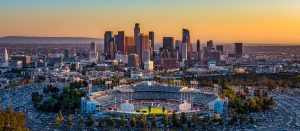
The stadium’s hilltop location, combined with narrow access roads and limited nearby street parking, means traffic can build quickly as game time approaches. With most vehicles funneled through a small number of entrances, delays are common if you arrive unprepared.
Parking at Dodger Stadium requires a bit of planning. So in this guide, I’ll explain how parking at Dodger Stadium actually works. You’ll find current parking prices, an overview of the different parking lots and gate entrances, the rules enforced on game days, and alternatives to driving directly to the stadium. The goal is simple: help you plan ahead so you spend less time stuck in traffic and more time enjoying the game.
All information in this guide is based on official Los Angeles Dodgers parking policies, published stadium guidelines, and common game-day parking scenarios fans encounter throughout the season.
Once you arrive at Dodger Stadium, parking is not self-serve. Every car entering the grounds is guided by stadium parking staff, and where you end up parking depends on the type of parking you purchased and which gate you use to enter.
If you’ve purchased General Admission parking, you won’t be able to choose your own parking spot. Instead, attendants will direct you to the next available space based on real-time traffic, arrival time, and how full each lot is. This system keeps cars moving along. But this also means your parking location can vary from game to game.
Fans who want more control over where they park can purchase Preferred Parking in advance. Preferred parking allows you to park in designated lots closer to the stadium and removes some of the guesswork that comes with general admission.
Without preferred parking, driving around the stadium to look for a “better” spot isn’t allowed. Attendants will guide you directly to your assigned area.
Parking at Dodger Stadium is paid for most events. The price will usually depend on when you buy and what level of access you want. There’s three three main parking options: General Admission, Preferred Parking, and Reserved Parking. Each works a little differently, and knowing the difference before you arrive can save you time (and stress!)
General Admission is the most common option and the one most fans use on game day.
When you buy General Admission parking ahead of time, your parking pass is delivered digitally through the MLB Ballpark App, as long as your ticketing account is properly linked. There’s no paper pass to print or bring with you.
With General Admission parking, you do not choose a specific lot. Stadium parking staff direct you to an available space based on your entry gate, arrival time, and traffic flow. This helps keep cars moving, especially during peak arrival windows.
Buying parking in advance is strongly recommended. Prepaid vehicles can use designated prepaid lanes, which typically move faster than cash or card payment lines at the gate. On busy nights, that alone can make a big difference.
Preferred Parking is a step up from General Admission and is designed for those who want more control over where they park.
Preferred Parking is available to:
Preferred Parking is primarily available to season ticket holders, who can enter through any parking gate and exit through any gate after the game. A limited number of Preferred Parking passes for Lots F, H, and K are also made available to the general public in advance, subject to availability.
The Dodgers do not publish a fixed price for Preferred Parking. Pricing varies based on demand and availability, and passes must be purchased before arriving at the stadium. There is no Preferred Parking available for purchase on game day.
Key things to know about Preferred Parking:
If parking close to a specific area of the stadium matters to you, Preferred Parking is the only official way to avoid being directed to a random lot.
Reserved Parking is the most exclusive option and is intended for fans attending many games throughout the season.
With Reserved Parking, you receive:
Reserved parking is available only in select lots and is sold on a season-long basis. Spots are extremely limited and are typically purchased through a Season Ticket Representative.
Knowing which option fits your needs before you arrive can make the difference between a smooth entry and sitting in traffic longer than you expected.
Dodger Stadium has five main parking gate entrances, and the gate you use determines which parking lots you may be directed to.
Here’s how the basic gate-to-lot assignments generally work:
| Entrance Gate | Typical Parking Lots You May Be Directed To |
| Sunset Gate A | Lots 10, 11, 12 |
| Scott Gate B | Lots 2, 3 |
| Golden State Gate C | Lots 3, 4, 15 |
| Academy Gate D | Lots 4, 5, 6, 7, 15 |
| Downtown Gate E | Lots 5, 6, 7, 8, 10 |
Each of these entrances funnels cars into nearby lots first. If those lots fill up, stadium attendants will guide drivers into other available spaces around the stadium.
How do the staff decide where to send you?
There are a few things that affect where you actually end up parking:
Preferred parking is for when you want less guesswork. It’s the official option that gives you access to specific preferred lots and more flexibility on the day.
Preferred parking usually makes sense if:
If you are arriving early and do not mind being directed, general parking is often fine.
The Dodgers also offer a limited upgrade option through the Lexus Preferred Parking Program.
Drivers arriving in a Lexus vehicle can receive a complimentary upgrade to Preferred Parking when they purchase General Admission parking online in advance.
Stadium staff verify eligibility on arrival, and upgrades are granted only if Preferred Parking space is available at that time.
Preferred parking, including Lexus upgrades, is limited and not guaranteed. Availability can change by game, and no preferred parking is sold at the stadium on game day.
Dodger Stadium has accessible parking and an ADA shuttle option, but it depends on having the right permit and arriving with enough time.
Disabled parking spaces are located in the following parking lots:
B, D, F, G, K, L, N, and P
These spaces are positioned within preferred parking areas to allow for closer access to stadium entry points. Parking cashiers and on-site attendants will help direct vehicles with valid permits to the appropriate lot.
To use disabled parking at Dodger Stadium, a valid state-issued disabled parking permit or license plate is required. This must be clearly displayed when entering the parking areas.
ADA Shuttle Service
The Dodgers provide a limited courtesy ADA shuttle for guests with disabilities, operating from various parking lots to areas near entry gates.
Once parked, call the Dodger Hotline at 323-224-2611 to request a shuttle dispatched to your location.
Parking at Dodger Stadium is tightly managed on game days. Knowing the basic rules ahead of time can help you avoid delays, fines, or being turned away at the gate.
Dodger Stadium parking gates open 2.5 hours before the scheduled game time for regular season games. Stadium entry gates open 2 hours before first pitch.
If you arrive too early, you may be asked to wait until parking officially opens. If you arrive late, expect heavier congestion as traffic funnels through fewer open lanes. Timing your arrival closer to gate opening often makes the entry process smoother.
The posted speed limit throughout all Dodger Stadium parking lots is 14 miles per hour.
This limit is actively enforced. The lots are busy with pedestrians, stadium staff, and vehicles moving in tight spaces, especially closer to game time. Driving slowly is not optional and failing to follow posted limits can result in warnings or removal from the parking area.
Tailgating is not allowed anywhere in Dodger Stadium parking lots.
This includes:
Alcohol is only permitted once you have entered the stadium itself. Parking staff monitor lots closely, and violations of the tailgating policy can lead to ejection from the parking area or further action under the Dodger Fan Code of Conduct.
Yes, sometimes, but it is not something you can count on.
Free street parking may exist on Boylston Ave, Lilac Terrace, and parts of Stadium Way outside the stadium.
The problem is that it:
If you try free street parking, assume you will need to arrive very early and still have a backup plan.
If you’re worried about how much parking at a Dodgers game will set you back, there are a few lower-priced parking options to consider before heading to the Stadium.
The Dodgers operate offsite parking in Lots 13 and 14, located along Stadium Way near the Los Angeles Fire Department training area. These lots are typically the cheapest official parking option, with prices significantly lower than general admission parking inside the stadium.
The trade-off is distance. Parking here requires a brisk uphill walk through Gate A to reach the stadium. For some visitors, especially on hot days or after night games, the incline can feel long.
This option works best if:
For anyone attending multiple games, working nearby, or visiting the area regularly, monthly parking near Dodger Stadium can be more cost-effective than paying per game.
Platforms like Spacer offer monthly parking options in surrounding Los Angeles neighborhoods such as Echo Park and Chinatown. These spaces are typically located outside the stadium grounds but can be:
Monthly parking makes sense if you:
You do not have to drive all the way into stadium traffic, especially if you’re coming from somewhere that makes transit or rideshare easier.
The Dodger Stadium Express is a free shuttle service available to ticket holders on game days. It runs from major transit hubs, including Union Station and select South Bay locations, and drops passengers directly at Dodger Stadium.
The Express typically begins service about two and a half hours before game time and continues running after the game ends. Drop-off and pickup points are located near the stadium entrances, including areas behind Center Field and near the Top Deck.
Parking is available at Union Station for a separate fee, making this a popular choice for drivers who want to park once and skip the hillside traffic around the stadium.
For current routes, schedules, boarding locations, and service times, it’s best to check the official Dodgers Dodger Stadium Express page before game day.
Rideshare services like Uber and Lyft are allowed at Dodger Stadium, but they come with trade-offs.
Rideshare can be easy on the way in and slow on the way out.
Best use case for rideshares are day games, splitting a ride with a group, or leaving a little early if you care more about a quick exit than seeing the last pitch.
The Dodgers encourage alternate transportation, and bike racks are available around the stadium.
This can work well from nearby neighborhoods, but remember the hilltop location. The ride in can feel fine. However, the ride back can be the “fun part,” depending on your comfort with elevation and night riding.
After you’ve cheered through nine innings, stayed for a walk-off, or waited out a post-game show, leaving Dodger Stadium is usually the final test of patience for the night.
What to expect after the final out
How much is parking at Dodger Stadium?
General parking is $27 in advance and $30 at the gate for regular-season games.
How much is Dodger Stadium parking in 2025?
The Dodgers list regular-season general parking at $27 in advance and $30 at the gate, with special-event rates varying.
How many parking spots are at Dodger Stadium?
Dodger Stadium lists parking for 16,000 automobiles.
Can I choose my parking lot?
With general parking, no. You will be directed. To park in a specific area, you generally need preferred parking purchased in advance.
Is preferred parking worth it?
It can be if you want more control and flexibility. It is limited and must be purchased in advance when available.
Parking at Dodger Stadium rewards a little planning. Reserving parking in advance removes a lot of the guesswork, especially on busy game days. Knowing which gate to use before you leave can also make arrival smoother.
In the end, the best parking choice comes down to when you arrive, how much you want to spend, and how far you’re comfortable walking. Plan around those factors, and the rest of the experience tends to fall into place.
Zarah Mae Torrazo leads the content team for Parkhound, WhereiPark, Spacer.com.au, and Spacer.com, where she focuses on helping drivers navigate city-specific parking rules, street regulations, and reliable monthly parking options across major North American and Australian markets. With nearly a decade of experience in research-driven content, she translates complex local parking policies into clear, practical guidance that helps people find safe, affordable spaces wherever they’re headed. Her work draws on a deep understanding of how urban parking systems operate and how shared parking solutions can support both drivers and communities.
Zarah Mae Torrazo leads the content team for Parkhound, WhereiPark, Spacer.com.au, and Spacer.com, where she focuses on helping drivers navigate city-specific parking rules, street regulations, and reliable monthly parking options across major North American and Australian markets. With nearly a decade of experience in research-driven content, she translates complex local parking policies into clear, practical guidance that helps people find safe, affordable spaces wherever they’re headed. Her work draws on a deep understanding of how urban parking systems operate and how shared parking solutions can support both drivers and communities.
This will close in 0 seconds
This will close in 0 seconds