
 Written by:
Louise is an SEO Writer for Spacer Technology, creating content for the Parkhound, WhereiPark, Spacer.com.au, and Spacer.com brands. Before joining Spacer, Louise wrote copies and blogs, news, retirement and financial education content. She is enthusiastic about reinforcing financial literacy and anything that can aid people in minimizing expenses and maximizing savings, which led to her passion for the sharing economy. She aims to educate people by translating complex ideas into easy-to-digest information and practical tips for maximum understanding and minimum migraine.
 Edited by:
Zarah Mae Torrazo leads the content team for Parkhound, WhereiPark, Spacer.com.au, and Spacer.com, where she focuses on helping drivers navigate city-specific parking rules, street regulations, and reliable monthly parking options across major North American and Australian markets. With nearly a decade of experience in research-driven content, she translates complex local parking policies into clear, practical guidance that helps people find safe, affordable spaces wherever they’re headed. Her work draws on a deep understanding of how urban parking systems operate and how shared parking solutions can support both drivers and communities.
Learn what parallel parking is, how to do it step by step, common mistakes to avoid, and whether it’s required for driving tests.

Parallel parking is a driving skill that allows a vehicle to park in a space between two parked cars, usually along a curb. Parallel parking is widely used in North America, especially in cities, residential neighborhoods, and areas with limited street parking. In fact, some states test this skill during the Department of Motor Vehicles (DMV) driving exam, though rules and testing requirements vary by jurisdiction.
This guide explains what parallel parking is, how to do it correctly, and when it is required by law. It also covers common mistakes, practical tips, and driving test expectations to help drivers park confidently and legally when using this essential driving skill.
Parallel parking is a method of parking a vehicle so it is aligned parallel to the curb and positioned between two other parked vehicles. Instead of pulling straight into a space, the driver reverses into the spot from the roadway. This parking method requires precise steering control, awareness of surrounding vehicles and traffic, and proper spacing from the curb to park safely and legally.
Parallel parking is used when parking spaces are arranged along the side of a roadway, and is most common in areas where space is limited and off-street parking is not available. Common examples include:
Can I enter a parallel parking space nose-first (forward parking)?
Forward parking into a parallel parking spot is only practical in limited situations, such as when:
Attempting to enter a parallel parking space nose-first between two parked vehicles usually requires multiple forward-and-back adjustments to achieve the correct angle and positioning. For this reason, reversing into the space is generally safer, more efficient, and easier to control.
Is reverse parking the only way to parallel park?
No, but reverse parking maneuver is a more effective and less stressful way to enter a curbside parking space. This is because the front wheels are used for steering, which makes for tighter turns and better control, as opposed to the rear wheels that can’t be steered to reposition the vehicle.
Parallel parking can be broken down into a few clear steps that help drivers position their vehicle safely, accurately, and in accordance to road and parking rules.
How to Prepare and Properly Position Your Vehicle
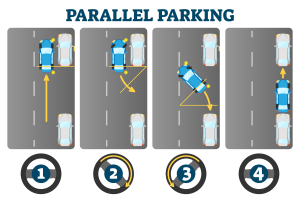
Using simple visual cues, controlled steering, and safe practice methods can make parallel parking easier and less stressful.
Many drivers find parallel parking difficult because it requires precise steering, accurate distance judgment, and awareness of surrounding vehicles. Likewise, drivers struggle when their nerves get the best of them that they end up making mistakes with the distance and timing of the maneuvers.
Turning the Steering Wheel Too Early or Too Late
Hitting the Curb or Parking Too Far Away
Poor Spatial Awareness and Depth Perception
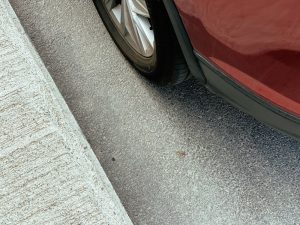
Parallel parking rules and testing requirements vary by location and are set by state or local transportation authorities. Some states include parallel parking skills on the practical driving tests, while others only test the theoretical aspect.
Is Parallel Parking Required for the Driving Test?
Parallel parking is required on the driving test in some U.S. states but other states have removed it from testing but still expect drivers to know how to park legally on public streets.
States Where the DMV Still Tests Parallel Parking
Several states continue to include parallel parking as part of the road test, particularly in urban or densely populated areas. Specifically, these states still require drivers to be tested on their parallel parking skills:
| Alaska
Arizona Connecticut Delaware Georgia Hawaii Idaho Indiana Iowa Kentucky Louisiana Massachusetts Michigan Minnesota Missouri Montana |
New Hampshire
New Jersey New Mexico New York North Dakota Oklahoma Pennsylvania Rhode Island South Carolina Texas Utah Vermont Washington West Virginia Wisconsin |
However, testing requirements are determined by each state’s DMV. Some testing sites may choose to evaluate examinees differently, such as testing the driver’s ability to maneuver into a set space or limiting the number of movements or corrections they can make when parking.
Parallel parking is legally required when parking along a curb on public streets unless signs indicate otherwise.
Always check with your local city or town government for the most current parking regulations to ensure both safety and compliance.
Parallel parking is an essential driving skill that combines vehicle control, spatial awareness, and knowledge of local parking laws. Like any skill, it improves with consistent practice and by following the proper techniques taught by driving schools, instructors and official driving manuals.
Key points to remember:
With regular practice and awareness of your local traffic laws, parallel parking becomes a manageable, safe, and practical skill for everyday driving. To continue improving, practice in low-traffic areas, review your state’s DMV guidelines, and gradually work up to parking in tighter spaces or more challenging urban streets.
Louise is an SEO Writer for Spacer Technology, creating content for the Parkhound, WhereiPark, Spacer.com.au, and Spacer.com brands. Before joining Spacer, Louise wrote copies and blogs, news, retirement and financial education content. She is enthusiastic about reinforcing financial literacy and anything that can aid people in minimizing expenses and maximizing savings, which led to her passion for the sharing economy. She aims to educate people by translating complex ideas into easy-to-digest information and practical tips for maximum understanding and minimum migraine.
Louise is an SEO Writer for Spacer Technology, creating content for the Parkhound, WhereiPark, Spacer.com.au, and Spacer.com brands. Before joining Spacer, Louise wrote copies and blogs, news, retirement and financial education content. She is enthusiastic about reinforcing financial literacy and anything that can aid people in minimizing expenses and maximizing savings, which led to her passion for the sharing economy. She aims to educate people by translating complex ideas into easy-to-digest information and practical tips for maximum understanding and minimum migraine.
This will close in 0 seconds
This will close in 0 seconds