
 Written by:
Louise is an SEO Writer for Spacer Technology, creating content for the Parkhound, WhereiPark, Spacer.com.au, and Spacer.com brands. Before joining Spacer, Louise wrote copies and blogs, news, retirement and financial education content. She is enthusiastic about reinforcing financial literacy and anything that can aid people in minimizing expenses and maximizing savings, which led to her passion for the sharing economy. She aims to educate people by translating complex ideas into easy-to-digest information and practical tips for maximum understanding and minimum migraine.
 Edited by:
The Spacer Technologies content team is a dedicated group of writers and experts with a deep-rooted passion for the sharing economy.
Our team is committed to creating informative, engaging, and valuable content across our various platforms.
Plan your parking and get tips for Fourth of July fireworks in NYC, Chicago, Los Angeles, Boston, and Washington DC. Beat the crowds with arrival strategies and transit options for 2026.
Every year, millions of people head to major U.S. cities to watch Fourth of July fireworks. Popular celebrations in New York City, Chicago, Los Angeles, Boston, and Washington DC attract large crowds, heavy traffic, and widespread road closures. Finding parking near these events can quickly become one of the most stressful parts of the day if you do not plan ahead.
Many city centers limit vehicle access during Independence Day celebrations. Parking garages near waterfronts, parks, and downtown viewing areas also tend to fill up hours before the fireworks begin. For visitors and tourists, navigating unfamiliar streets and transit systems can make the experience even more challenging.
This guide covers some of the best parking strategies for major Fourth of July fireworks events across the United States. You will also find tips on road closures, public transportation options, and ways to avoid post-event traffic when leaving crowded areas.
New York City hosts one of the country’s largest Independence Day celebrations during the annual Macy’s 4th of July Fireworks show. Official viewing areas, road closures, and parking demand can vary each year depending on whether the fireworks launch from the East River or Hudson River.
In recent years, official viewing zones have included parts of Midtown Manhattan, the Lower East Side, Long Island City, Brooklyn waterfront neighborhoods, and areas near the Brooklyn Bridge and Seaport District. Parking garages near these locations typically fill several hours before the fireworks begin.
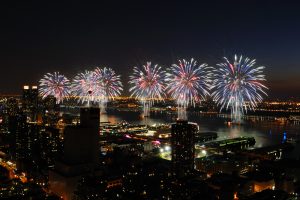
Parking availability for the New York City fireworks depends heavily on the official Macy’s 4th of July Fireworks viewing map released closer to July 4. For 2026’s 50th anniversary show, which coincides with America’s 250th birthday, fireworks will launch simultaneously from three locations: barges on the lower East River near the Seaport District, barges on the lower Hudson River in partnership with Jersey City, and directly from the Brooklyn Bridge itself. This dual-river, three-site format is entirely new for 2026, meaning more neighborhoods will have direct sightlines than in previous years. Drivers should look for parking near waterfront viewing areas with subway or ferry access on either side of Manhattan.
Manhattan Parking Options
East Side Manhattan garages often provide the closest access to official fireworks viewing areas near the FDR Drive, Seaport District, and Midtown East. These garages are convenient but usually experience the highest pricing and the most severe post-event congestion.
Drivers who want easier exits after the fireworks may want to park farther north in Upper Manhattan or use garages closer to subway lines outside the main closure zones.
Brooklyn and Queens Parking Options
Brooklyn and Queens can offer more flexible parking options during the Fourth of July fireworks. Areas near Long Island City, Downtown Brooklyn, Williamsburg, and Brooklyn Bridge Park often provide access to waterfront viewing locations while avoiding some Manhattan traffic bottlenecks.
Many visitors also use park-and-ride strategies by parking farther from the event zone and completing the trip via subway or ferry. For 2026, the Jersey City waterfront is an officially confirmed viewing area for the Hudson River launch site, making it a viable destination for visitors who want to avoid Manhattan entirely. PATH train and ferry connections from New Jersey provide direct access.
Many garages in Manhattan, Brooklyn, and Jersey City reach capacity several hours before the New York City fireworks viewing event starts, especially near the East River, the Seaport District, and the Hudson River waterfront. Note that for 2026, some prime viewing areas at Brooklyn Bridge Park and at Pier 16 and Pier 17 in the Seaport District require free advance tickets, with up to 100,000 available and distributed online on a first-come, first-served basis starting July 1. Securing your viewing ticket before you plan your parking will help you determine which waterfront area to target.
Drivers visiting from outside the city may want to reserve parking in advance through major parking platforms. Reserved parking can help reduce the time spent searching for available garages during heavy holiday traffic. Rates are often higher on July 4, particularly for garages within walking distance of official viewing zones.
It’s also a good idea to compare parking hours and exit policies before booking. Some garages may temporarily restrict vehicle access immediately after the fireworks because of nearby street closures and crowd control measures.
Visitors can also monitor the MTA transit status in case driving conditions worsen closer to the event date.
Road closures are common in New York City during the Fourth of July fireworks, especially around the East River and key viewing areas in Manhattan, Brooklyn, and Queens. These restrictions are designed to manage pedestrian flow and ensure public safety, but they can significantly impact driving routes and parking access.
Most closures begin several hours before the fireworks start and remain in place until crowds clear after the event. Streets near Lower Manhattan, the Seaport District, Brooklyn waterfront areas, portions of FDR Drive, and Hudson River viewing zones may experience significant closures and congestion. Additional restrictions may also affect access routes serving Jersey City viewing areas. Visitors should check official event maps closer to July 4.
Arriving early is one of the most effective ways to avoid delays. Many drivers aim to reach parking areas by late afternoon to secure entry before closures take effect. Leaving immediately after the fireworks is usually not recommended, as exit routes tend to be heavily congested.
Check NYC DOT and 511NY for real-time updates on road conditions and closures.
Public transit is often the most practical way to reach and leave Fourth of July fireworks viewing areas in New York City. For the 2026 event, expanded viewing areas are expected across Manhattan, Brooklyn, Queens, and Jersey City as part of Macy’s 50th anniversary fireworks show.
The MTA typically increases service on major subway lines serving Manhattan, Brooklyn, and Queens during large public events. Additional late-night service and crowd management measures are commonly implemented near major waterfront stations and transit hubs. Final 2026 transit schedules and service advisories are expected to be announced closer to Independence Day.
Ferry routes can also be a useful option, especially for visitors staying in Brooklyn, Queens, or New Jersey. They offer direct access to waterfront areas and can help avoid some of the heaviest traffic zones after the event.
For those who still prefer to drive part of the way, park-and-ride strategies are often used. This involves parking in outer boroughs or nearby suburbs and completing the trip via subway or ferry.
Chicago fireworks celebrations are often concentrated along the lakefront, with Navy Pier serving as one of the city’s most popular viewing destinations. The area usually draws large crowds, which means parking fills quickly and traffic congestion builds up several hours before the event begins.
Because much of the lakefront is heavily restricted during peak summer events, drivers often need to plan parking several blocks away or use transit connections. Timing and flexibility are especially important if you plan to drive.
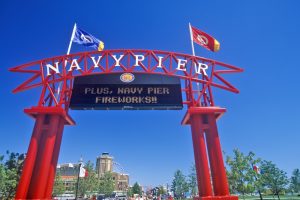
Parking near Navy Pier is limited and typically comes at a premium on July 4. The closest garages are often the most convenient but also the first to fill. For 2026, the Independence Day show starts at 10 PM and runs 15 minutes. This is the largest and longest display in Navy Pier’s history, and was designed to commemorate the 250th anniversary of the United States. Because this year’s show is expected to draw the largest crowds in recent Navy Pier history, parking pressure will be higher than usual, and the South Dock viewing area is likely to fill by 9 PM.
Many visitors choose parking structures in Streeterville, the Loop, or River North, then walk or take a short rideshare to the lakefront. These areas generally provide a better balance between access and post-event exit options.
It is also worth considering garages slightly farther west of Michigan Avenue, where rates may be lower and exit routes are less congested after the fireworks.
Traffic near the lakefront becomes extremely slow on July 4, especially along Lake Shore Drive and surrounding downtown streets. Closures and pedestrian-heavy zones can significantly limit access to parking garages close to the fireworks area.
Arriving early in the afternoon is strongly recommended. Many drivers aim to be parked before early evening to avoid peak congestion. With the 2026 show starting at 10 PM, the window between arrival and the fireworks is longer than average, so use that time to walk to viewing areas rather than driving closer to the lakefront. Ohio Street Beach, just west of Navy Pier, is a quieter alternative to the crowded South Dock for families who arrive early.
If possible, plan alternative exit routes that avoid Lake Shore Drive and major downtown intersections.
Public transportation is one of the most reliable ways to reach and leave Chicago’s Fourth of July fireworks, especially around Navy Pier and the lakefront. It helps avoid limited parking availability and heavy congestion along downtown streets.
The Chicago Transit Authority (CTA) operates train and bus routes that connect major parts of the city to downtown Chicago. The Red Line and Brown Line are commonly used to reach areas within walking distance of the lakefront. From there, visitors can walk or use short rideshare trips to reach viewing locations.
Metra commuter rail lines are also useful for visitors coming from the suburbs. Many stations connect directly to downtown terminals, making it easier to avoid driving into congested areas entirely. From Union Station or Ogilvie Transportation Center, it is a short walk or transit ride to the lakefront.
Expect crowded trains before and after the fireworks. Planning extra travel time is important, especially during late evening departures when demand peaks.
Los Angeles hosts multiple Fourth of July fireworks shows across the region, including large events in Downtown LA, the Hollywood Bowl, Marina del Rey, and surrounding beach cities. Each location has different parking conditions, but all tend to experience heavy traffic and limited availability on the holiday.
Because events are spread across a wide metropolitan area, drivers often need to plan around freeway congestion, local street closures, and event-specific parking restrictions. Arriving early and choosing parking near transit connections can help reduce delays before and after the fireworks.
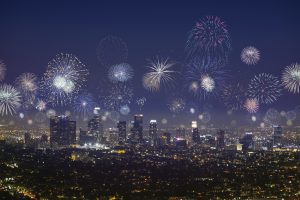
Parking in Los Angeles on the Fourth of July depends heavily on which event you are attending, since celebrations are spread across multiple locations. Each venue has different access points, restrictions, and traffic conditions, so choosing the right parking area is important.
For Downtown LA events, parking structures near the Arts District, Little Tokyo, and Bunker Hill are commonly used. These areas provide relatively close access, but expect higher demand and controlled exits after the fireworks.
Event-specific parking policies vary by venue. Visitors attending major ticketed celebrations should review official venue parking and shuttle information before arriving.
For Marina del Rey and nearby beach fireworks, parking structures and public lots fill quickly. Visitors often park farther inland and walk or use short rideshare trips to reach the waterfront.
In Pasadena and surrounding areas, street parking and commercial lots are available, but local restrictions may apply depending on the specific event zone.
Traffic congestion is common across Los Angeles during Fourth of July celebrations, especially near beaches, downtown event spaces, and major entertainment venues. Freeways and local streets can become heavily congested several hours before fireworks begin.
Popular routes such as the 101, 110, and I-10 often experience slower travel times throughout the afternoon and evening. Areas near Santa Monica, Marina del Rey, and Downtown LA are typically among the busiest. Drivers should also expect temporary street closures and restricted access near major event zones.
Leaving immediately after the fireworks can be difficult because large crowds exit at the same time. Some visitors choose to wait nearby after the event to avoid the heaviest traffic periods. Others park farther away from the venue to gain easier freeway access when leaving.
Checking live traffic conditions before departure can help drivers adjust routes and avoid unexpected closures.
Public transportation and shuttle services can help reduce the stress of driving during Fourth of July events in Los Angeles. Many major fireworks venues offer alternative transportation options because parking near event areas is often limited.
The LA Metro rail system connects several parts of the city to Downtown LA, Hollywood, Pasadena, and nearby entertainment districts. Visitors attending fireworks near these areas may find it easier to park near a Metro station and complete the trip by train.
The Hollywood Bowl also operates official shuttle and park-and-ride services from designated locations across Los Angeles County. These services are popular during large events because they help avoid stacked parking and long exit delays at the venue.
Rideshare services remain widely available during the holiday, but pickup zones near fireworks events can become crowded after the show. Walking several blocks away from major exits may help reduce wait times and surge pricing.
Boston’s Fourth of July celebrations attract large crowds to the Charles River Esplanade and surrounding downtown areas each year. Parking can be especially difficult because of road closures, limited garage availability, and heavy pedestrian traffic near the waterfront.
The 2026 Boston Pops Fireworks Spectacular will serve as a signature event of Massachusetts’ MA250 celebration commemorating the 250th anniversary of the United States. The free concert returns to the Hatch Shell on the Charles River Esplanade on July 4, followed by a fireworks display over the Charles River.
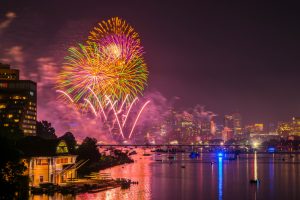
Parking near the Boston Esplanade is limited on the Fourth of July, especially around Back Bay, Beacon Hill, and the Charles River waterfront. Many streets near the event area are closed or heavily restricted throughout the day, making advance planning important.
Drivers looking for the closest access often use parking garages in Back Bay or downtown Boston. However, these locations usually fill quickly and may experience long exit delays after the fireworks end.
Some visitors choose to park across the river in Cambridge and walk or use public transit to reach the Esplanade. This option can provide easier access to less congested exit routes later in the evening.
Parking farther from the waterfront may also help avoid the heaviest traffic immediately after the event. Areas near MBTA stations are especially useful for visitors planning to combine driving with public transportation.
Road closures are common throughout downtown Boston during Fourth of July celebrations, especially near the Charles River Esplanade, Storrow Drive, and Back Bay. These restrictions are put in place to manage pedestrian traffic and event security, but they can make driving through the city difficult later in the day.
Many streets near the waterfront become inaccessible several hours before the fireworks begin. Drivers should also expect delays around bridges, major intersections, and garage entrances close to the event area.
Arriving early can help avoid some of the worst congestion. Visitors planning to drive should also review temporary parking restrictions and towing notices before leaving their vehicles.
Public transportation is one of the easiest ways to reach the Boston fireworks celebrations, especially for visitors staying outside downtown. The MBTA subway and commuter rail systems help reduce the need to navigate road closures and limited parking near the Esplanade.
The Green Line and Red Line are commonly used to access viewing areas near the Charles River. Commuter rail services can also be useful for travelers coming from surrounding suburbs and nearby cities.
Stations near the waterfront and downtown Boston typically become crowded before and after the fireworks, so travelers should allow extra time for boarding and transfers. Some riders also choose to park near outer MBTA stations and complete the rest of the trip by train.
Washington DC hosts one of the country’s most popular Fourth of July celebrations, with fireworks viewed from locations throughout the National Mall area, including areas around the U.S. Capitol, Washington Monument, Lincoln Memorial, and adjacent parklands. Large crowds, strict security measures, and extensive road closures can make parking difficult throughout the downtown area. Many visitors choose to park outside the city center and use Metro services to reach the National Mall.
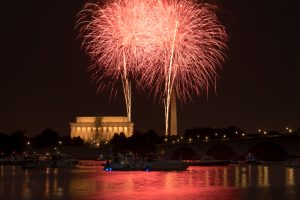
Parking near the National Mall is extremely limited on the Fourth of July. Many streets surrounding the Smithsonian museums, memorials, and monument areas are closed to vehicles for security and crowd control.
Drivers who want to stay close to the event often look for parking garages in Penn Quarter, Foggy Bottom, Arlington, and areas outside the immediate Mall perimeter. Parking farther away can also make it easier to leave after the fireworks, since traffic near the Mall tends to remain congested late into the evening.
Arlington, Virginia is another common option for visitors who prefer easier highway access after the event. Several parking garages near Metro stations allow travelers to continue into DC using public transportation.
Road closures throughout downtown Washington DC begin well before the fireworks start. Official 2026 road closure maps and traffic advisories have not yet been released by the National Park Service. Visitors should expect significant road closures, security screening areas, and restricted vehicle access around the National Mall and surrounding federal areas on July 4. Check the National Park Service closures page for updates as event details are finalized.
Security checkpoints and pedestrian-only zones are also common during Independence Day celebrations. Drivers should expect restricted vehicle access near the Capitol, Smithsonian museums, and nearby federal buildings.
Arriving early is strongly recommended for anyone planning to drive into the city. Traffic congestion typically increases throughout the afternoon and can continue for hours after the fireworks end.
The Washington Metro system is one of the most convenient ways to reach Fourth of July fireworks events near the National Mall. Many visitors avoid driving directly into downtown and instead use park-and-ride options at suburban Metro stations.
Stations in Virginia and Maryland often provide easier parking access compared to garages near the Mall. Travelers can then continue into central DC using Metrorail service. Popular stations for fireworks access usually include Smithsonian, L’Enfant Plaza, and Federal Triangle, although crowds can become very heavy after the event.
Visitors should also expect longer wait times when leaving after the fireworks. Some travelers choose to walk farther from the National Mall before entering a station to avoid the busiest crowds.
No matter which city you visit for Fourth of July fireworks, planning ahead can make a major difference. Parking demand increases quickly during large holiday events, especially near waterfronts, downtown districts, and public parks.
With the right parking strategy and transportation plan, attending Fourth of July fireworks can be much less stressful and more enjoyable, especially in busy cities with large holiday crowds.
Planning ahead is one of the best ways to avoid unnecessary stress during Fourth of July celebrations. Parking areas near major fireworks events can fill up quickly, and road closures often begin hours before the show starts. Reserving parking in advance, arriving early, and checking official city updates can help make the experience smoother from start to finish.
For many visitors, combining parking with public transportation is often the most practical option, especially in crowded downtown areas. Choosing parking slightly farther from the main event zone may also lead to easier exits and shorter delays after the fireworks end. Whether you are visiting New York City, Chicago, Los Angeles, Boston, or Washington DC, a flexible plan can help you spend less time in traffic and more time enjoying the celebration.
SPUS/SPAU
Louise is an SEO Writer for Spacer Technology, creating content for the Parkhound, WhereiPark, Spacer.com.au, and Spacer.com brands. Before joining Spacer, Louise wrote copies and blogs, news, retirement and financial education content. She is enthusiastic about reinforcing financial literacy and anything that can aid people in minimizing expenses and maximizing savings, which led to her passion for the sharing economy. She aims to educate people by translating complex ideas into easy-to-digest information and practical tips for maximum understanding and minimum migraine.
Louise is an SEO Writer for Spacer Technology, creating content for the Parkhound, WhereiPark, Spacer.com.au, and Spacer.com brands. Before joining Spacer, Louise wrote copies and blogs, news, retirement and financial education content. She is enthusiastic about reinforcing financial literacy and anything that can aid people in minimizing expenses and maximizing savings, which led to her passion for the sharing economy. She aims to educate people by translating complex ideas into easy-to-digest information and practical tips for maximum understanding and minimum migraine.
This will close in 0 seconds
This will close in 0 seconds