
 Written by:
Louise is an SEO Writer for Spacer Technology, creating content for the Parkhound, WhereiPark, Spacer.com.au, and Spacer.com brands. Before joining Spacer, Louise wrote copies and blogs, news, retirement and financial education content. She is enthusiastic about reinforcing financial literacy and anything that can aid people in minimizing expenses and maximizing savings, which led to her passion for the sharing economy. She aims to educate people by translating complex ideas into easy-to-digest information and practical tips for maximum understanding and minimum migraine.
 Edited by:
The Spacer Technologies content team is a dedicated group of writers and experts with a deep-rooted passion for the sharing economy.
Our team is committed to creating informative, engaging, and valuable content across our various platforms.
Find monthly parking in Washington, D.C. Compare costs and availability across Downtown, Capitol Hill, NoMa, Dupont Circle, Arlington, and Rosslyn.
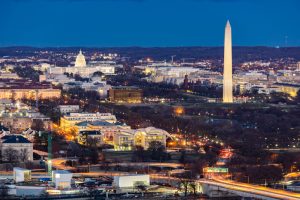
Parking in Washington, D.C. isn’t always as simple as finding an open space and moving on with your day. Depending on where you’re headed, you may be dealing with residential permit restrictions, time-limited street parking, rush hour rules, or garages that charge premium rates in busy parts of the city.
For people who drive into the same area regularly, monthly parking can take much of that uncertainty out of the equation. Having a dedicated space often means spending less time searching for parking and more time focusing on where you actually need to be.
Whether you’re commuting to work, living in the city, or planning an extended stay, knowing which neighborhoods offer the best monthly parking options can make finding a space much easier.
Also Read: Philadelphia Monthly Parking Guide (2026): Neighborhoods & Costs
Monthly parking is often the most practical solution for drivers who park in the same area regularly since it offers:
In a city like Washington, D.C., where parking demand is consistently high, monthly parking is commonly used by commuters, government employees, and residents in dense neighborhoods.
Where you park in Washington, D.C. can have a significant impact on both availability and cost. Areas closest to major employment centers tend to have the highest demand, while neighborhoods near Metro stations or just outside the city center often offer more flexibility.
If you’re comparing monthly parking options, it helps to understand what each neighborhood is known for and who it’s best suited for. Here’s what drivers can generally expect in some of the most popular areas around Washington, D.C.
Downtown Washington, D.C. is one of the most competitive parking areas in the city. Major office corridors, federal buildings, hotels, and retail districts all contribute to strong weekday demand, making parking especially valuable in this part of Washington.
As a result, monthly parking rates here are typically higher than in most other neighborhoods. Even so, drivers can still find a mix of commercial garages, office building parking, and reserved private spaces, particularly on the edges of Downtown where availability tends to be better than in the core business district.
For professionals working near K Street, Farragut Square, Penn Quarter, or Federal Triangle, the added cost is often offset by convenience. Being within walking distance of major offices and employment centers can simplify the daily commute and reduce the need for additional transit connections.
Capitol Hill remains a high-demand parking area due to its proximity to government buildings, Union Station, and surrounding residential neighborhoods. For many drivers, being close to these destinations makes monthly parking a practical alternative to relying on limited street parking.
Monthly parking is commonly used by federal employees, residents, and long-term visitors who need regular access to the area. Most available spaces are found in garages or private residential properties, which can provide a more reliable option than navigating parking restrictions that are common throughout the neighborhood.
While availability can be competitive, Capitol Hill continues to be a popular choice for drivers who prioritize convenience and proximity to some of the city’s most important employment and transportation hubs.
NoMa (North of Massachusetts Avenue) has become one of the fastest-growing parking markets in Washington, D.C. Thanks to a wave of residential and mixed-use development, the neighborhood generally offers more parking inventory than many of the city’s older, denser areas.
That additional supply often translates into better availability and more affordable monthly parking compared to Downtown or Capitol Hill. Drivers can typically choose from a mix of residential garages, commercial facilities, and private rental spaces.
Its proximity to Union Station and the Red Line also makes NoMa a convenient commuter hub. For drivers who don’t necessarily need to park directly Downtown, the combination of transit access, availability, and relatively lower costs can make NoMa one of the most attractive monthly parking options in the city.
Dupont Circle offers a central location that remains popular with residents, office workers, and visitors alike. Its accessibility and proximity to both Downtown and Northwest D.C. contribute to steady demand for parking throughout the neighborhood.
Monthly parking is available in residential garages, apartment buildings, and select commercial facilities, though supply is generally more limited due to the area’s dense layout. While pricing is often higher than in surrounding neighborhoods, many drivers find the tradeoff worthwhile for the convenience of parking close to where they spend most of their time.
For residents and professionals who regularly travel within central Washington, Dupont Circle can offer a level of convenience that’s difficult to replicate farther from the city center.
Many commuters choose to park just outside Washington, D.C. and use Metro access to reach the city. Arlington and Rosslyn are among the most popular alternatives, largely because they offer easier availability and generally lower monthly parking costs than many neighborhoods within Washington itself.
Drivers will find various parking options, including commercial garages, office building facilities, and residential spaces, many of which are located within walking distance of Metro stations. This makes it possible to maintain convenient access to Downtown without paying higher parking rates found closer to the city center.
The main tradeoff is that the final portion of the commute typically requires a Metro ride or short walk. For many drivers, however, the combination of lower costs and increased parking availability makes Arlington and Rosslyn a practical long-term solution.
For drivers focused on balancing convenience and affordability, it can be worth expanding the search beyond a final destination and looking at areas with strong Metro access.
Parking near a Metro station often opens up additional inventory and can reduce monthly costs compared to parking in the busiest parts of the city. Neighborhoods that offer direct transit connections can provide an effective middle ground between accessibility and affordability.
For commuters with some flexibility in their schedules, traveling a few extra stops on Metro can sometimes result in better availability and more cost-effective monthly parking options.
The best location often depends on why you’re parking in Washington, D.C. in the first place.
Drivers who work in Downtown, Penn Quarter, or near federal offices often prioritize convenience and proximity, even if parking costs are higher.
For commuters looking for a balance between access and affordability, neighborhoods like NoMa can offer easier availability while still providing quick connections to the rest of the city.
Those focused on keeping monthly costs down frequently look outside the downtown core. Areas such as Arlington and Rosslyn remain popular because they provide access to Metro stations while typically offering more parking options.
If flexibility matters more than being directly next to your destination, expanding your search by a few Metro stops can often open up additional monthly parking opportunities.
Monthly parking prices in Washington, D.C. vary based on neighborhood, parking type, and proximity to major employment centers. Spaces located in high-demand business districts generally command higher rates, while neighborhoods with greater parking availability or strong transit connections often provide more affordable alternatives.
The table below provides a general overview of what drivers can typically expect in some of the area’s most popular parking markets.
| Neighborhood | Best For | Typical Monthly Parking Cost | Spacer’s Typical Monthly Range* |
| Downtown Washington, D.C. | Office workers, business professionals, and drivers who want to be within walking distance of major employment centers | $250–$450+ | $245–$290
|
| Capitol Hill | Federal employees, government contractors, residents, and drivers needing access to the Capitol complex or Union Station | $200–$400 | ~$250 |
| NoMa | Commuters seeking a balance between cost, availability, and transit access | $150–$300 | $228–$250 |
| Dupont Circle | Residents and professionals who frequently travel within central Washington, D.C. | $200–$350 | $245-$290 |
| Arlington/Rosslyn | Commuters looking to reduce parking costs while staying within easy Metro access of central Washington, D.C. | $100–$250 | $140–$220/month (Arlington–Rosslyn commuter belt) |
*Ranges reflect the typical cluster of Spacer listings in each neighborhood. Individual prices may be lower or higher depending on demand, location, and parking features.
Finding monthly parking in Washington, D.C. is often easier when you approach the search strategically. A small adjustment in location or parking type can make a noticeable difference in both availability and monthly cost. A few practical strategies include:
Monthly parking is also useful for visitors staying in Washington, D.C. for several weeks or months.
It can be a practical option for:
Compared to daily garage rates, monthly parking often provides better value and convenience for extended stays.
Parking in Washington, D.C. varies depending on location, frequency of use, and how close you need to be to major destinations. Central neighborhoods generally prioritize convenience and proximity, while areas farther out tend to offer more flexibility and lower monthly costs.
As the breakdown shows, each neighborhood serves a different type of driver. Downtown, Capitol Hill, and Dupont Circle are best suited for those who want to stay close to major employment and residential hubs, while NoMa offers a middle ground with stronger availability and Metro access. Outside the core, Arlington and Rosslyn act as commuter alternatives, helping drivers reduce costs while still staying connected to central Washington.
Ultimately, the right choice depends on whether you value proximity or savings more. Central locations tend to justify higher pricing through convenience, while nearby commuter areas can significantly reduce monthly costs. Comparing neighborhoods and planning ahead makes it easier to secure reliable monthly parking and avoid the stress of daily parking searches in one of the busiest cities in the United States.
Louise is an SEO Writer for Spacer Technology, creating content for the Parkhound, WhereiPark, Spacer.com.au, and Spacer.com brands. Before joining Spacer, Louise wrote copies and blogs, news, retirement and financial education content. She is enthusiastic about reinforcing financial literacy and anything that can aid people in minimizing expenses and maximizing savings, which led to her passion for the sharing economy. She aims to educate people by translating complex ideas into easy-to-digest information and practical tips for maximum understanding and minimum migraine.
Louise is an SEO Writer for Spacer Technology, creating content for the Parkhound, WhereiPark, Spacer.com.au, and Spacer.com brands. Before joining Spacer, Louise wrote copies and blogs, news, retirement and financial education content. She is enthusiastic about reinforcing financial literacy and anything that can aid people in minimizing expenses and maximizing savings, which led to her passion for the sharing economy. She aims to educate people by translating complex ideas into easy-to-digest information and practical tips for maximum understanding and minimum migraine.
This will close in 0 seconds
This will close in 0 seconds