
 Written by:
Louise is an SEO Writer for Spacer Technology, creating content for the Parkhound, WhereiPark, Spacer.com.au, and Spacer.com brands. Before joining Spacer, Louise wrote copies and blogs, news, retirement and financial education content. She is enthusiastic about reinforcing financial literacy and anything that can aid people in minimizing expenses and maximizing savings, which led to her passion for the sharing economy. She aims to educate people by translating complex ideas into easy-to-digest information and practical tips for maximum understanding and minimum migraine.
 Edited by:
The Spacer Technologies content team is a dedicated group of writers and experts with a deep-rooted passion for the sharing economy.
Our team is committed to creating informative, engaging, and valuable content across our various platforms.
Learn how No Parking signs work in the U.S. and Canada, including rules, fines, enforcement, and tips to avoid tickets.
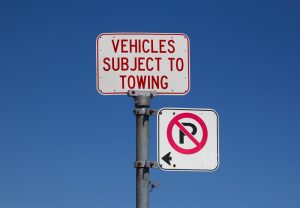
Parking in cities across North America can be confusing, especially when it comes to No Parking signs. While these signs may seem straightforward, their interpretation and enforcement can vary between the U.S. and Canada. From busy downtown streets in New York City to residential neighborhoods in Toronto, municipalities enforce parking rules strictly.
Because of these local differences, drivers often misunderstand what the signs mean, when they are in effect, and what happens if they are ignored. Even small mistakes, such as stopping for a few minutes in a restricted area, can lead to fines or towing. Understanding these rules is essential to avoid unnecessary penalties.
In this guide, we explain how No Parking signs work in the U.S. and Canada, how enforcement is handled, and practical tips to help you avoid tickets and towing.
A “No Parking” sign indicates areas where leaving your vehicle unattended is not allowed. However, the exact rules can vary depending on the wording, symbols, and local regulations.
It is important to distinguish “No Parking” from other common restrictions, as each has different rules:
Signs often include arrows, time ranges, or specific days that clarify where and when the restriction applies. For example, a sign with an arrow pointing to the right and “7 AM to 7 PM” means the restriction applies in that direction during those hours. Parking outside those hours may be allowed if no other restrictions are posted.
Some signs also include additional instructions, such as loading zone access or residential permit exceptions. Always check the full sign to understand all applicable rules.
Understanding these details helps you interpret No Parking signs correctly and avoid unnecessary fines or penalties.
In North America, No Parking signs are enforced under municipal, provincial, or state laws. Violating these signs can lead to tickets, fines, or towing, depending on the jurisdiction.
United States
In the United States, the exact definition of a No Parking sign varies by city and state. In general, it means a vehicle cannot be left unattended in the designated area. Brief stops to pick up or drop off passengers are usually allowed, but leaving the vehicle unattended is not.
Local traffic codes define the penalties for violations. For example, in New York City, a No Parking violation typically results in a fine of around $60-65, along with possible towing. Similar rules apply in cities such as Los Angeles, Chicago, and Houston, although fines and enforcement policies vary.
Canada
In Canada, No Parking rules are defined by provincial laws and municipal bylaws. For example, under Ontario’s Highway Traffic Act, a No Parking sign means a vehicle cannot be left unattended in the designated area. Brief stops to pick up or drop off passengers are generally allowed.
Major cities such as Toronto and Vancouver enforce additional bylaws that specify time restrictions, residential permit zones, and commercial vehicle rules. Fines vary by location but typically range from about CAD $30 to over $100, depending on the city and the violation.
In both the U.S. and Canada, a vehicle is generally considered parked when it is stopped and not actively engaged in picking up or dropping off passengers or loading goods. Leaving the vehicle unattended is a clear example, but even remaining inside the vehicle may still be considered parking if no active loading or passenger activity is taking place.
Understanding these conditions can help drivers follow No Parking rules correctly and avoid fines or towing.
Enforcement of No Parking signs ensures safety, prevents congestion, and keeps public spaces accessible across North America.
Understanding how enforcement works helps drivers avoid fines, towing, and other penalties by following the rules and paying attention to posted signs.
Penalties for parking in a No Parking zone vary across cities and provinces, and knowing what to expect can help drivers understand the consequences of ignoring these signs and avoid unexpected expenses.
Below is an overview of typical fines, towing fees, and other penalties for parking in No Parking zones in major cities across the U.S. and Canada.
While fines for violating No Parking signs in North America can range from $30 to over $100, towing and storage fees can make the total cost much higher. Understanding these fines, along with potential towing and storage costs, is key to staying compliant and avoiding escalating expenses.
Avoid fines and towing with these practical parking tips:
Even a few minutes in the wrong spot can result in a ticket, so always double-check signs before leaving your vehicle.
No Parking signs carry legal authority across North America, and violating them can result in fines, towing, or other penalties. Paying close attention to posted signs and understanding local parking regulations helps drivers avoid No Parking fines and stay compliant while keeping streets safer and more organized.
Louise is an SEO Writer for Spacer Technology, creating content for the Parkhound, WhereiPark, Spacer.com.au, and Spacer.com brands. Before joining Spacer, Louise wrote copies and blogs, news, retirement and financial education content. She is enthusiastic about reinforcing financial literacy and anything that can aid people in minimizing expenses and maximizing savings, which led to her passion for the sharing economy. She aims to educate people by translating complex ideas into easy-to-digest information and practical tips for maximum understanding and minimum migraine.
Louise is an SEO Writer for Spacer Technology, creating content for the Parkhound, WhereiPark, Spacer.com.au, and Spacer.com brands. Before joining Spacer, Louise wrote copies and blogs, news, retirement and financial education content. She is enthusiastic about reinforcing financial literacy and anything that can aid people in minimizing expenses and maximizing savings, which led to her passion for the sharing economy. She aims to educate people by translating complex ideas into easy-to-digest information and practical tips for maximum understanding and minimum migraine.
This will close in 0 seconds
This will close in 0 seconds